

River Kennet Hatchery Project
Updated: Aug 17
Hatchery 2026 update
UPDATE - 2026
The groundbreaking new Kennet coarse fish hatchery opened in February 2024 as a result of the magnificent response to our call to local anglers and angling clubs to ensure we had sufficient funds to get us up and running. The running costs for feed, power and replacement parts are now working out at £6000 per year so it is important that the hatchery has a secure financial base.
The original appeal launched by the Kennet Valley Fisheries Association for project partners and donors was an outstanding success and nearly all the angling clubs and fisheries along the Kennet Valley, including Newbury AA, Civil Service AS, Red Spinners AS, CALPAC, Thatcham AA, Reading Fishing Club and ARK, came on board. These contributions have been been augmented by generous donations from Thomas Turner Ltd and the charity Fish in Need of which Paul Whitehouse and John Bailey are trustees.

HOW WE OPERATE
The hatchery is run as a not-for-profit enterprise led by RDAA in collaboration with all the partner clubs in the Kennet Valley. It is managed by the Association’s fisheries manager, Del Shackleford, with advice and support from experienced coarse fish specialists together with the Environment Agency’s fish rearing facility at Calverton and the Institute of Fisheries Management. Local volunteers assist with the day-to-day running as required.
The hatchery begun operating in March 2024 and is now well into its third season. It will eventually mimic the breeding cycles of coarse fish in the wild, starting with dace, followed by roach and then chub and barbel. This year three species are being bred as we were unable to access the roach in time. Only brood fish from the Kennet are used which does make collecting roach in April somewhat problematic! The fish are temporarily removed from the river, either by rod and line or electro-fishing, close to the point of spawning and their eggs harvested and mixed with milt from the males. The resulting fry are then nurtured in the hatchery until they are big enough to survive in the wild, when around 70% will be reintroduced to the river at known spawning locations. The remaining 30% are kept at the hatchery for longer, to be released later as mature fish.
PROGRESS SO FAR
2025
Our target was set at a 30% increase in the results we gained in our 'trial' first year in 2024. The plan was to strip and rear all four of our target species, Chub, Barbel, Dace and Roach. This we achieved.
Dace broodstock were collected from the river at Hungerford and brought into the hatchery in late February. These fish were striped and then releaced back into the river within 72 hours.
Roach were collected in late April from Kintbury, and the same process followed.
Chub & Barbel broodstock were collected from the RDAA Lower Benyon fishery in early May with the help of the Environment Agency Fisheries team.
After 8 weeks approximate total 40,000 fry of all 4 species were released into the river at three locations- Chamberhouse farm in Thatcham (Red Spinners) - Brimpton (Newbury AA) and at Lower Benyons (RDAA).
We also released around 1000 yearlings that were held back from 2024 at all three sites
2026
Our plan for 2026 was to refine our procedures and thus increase our total number of fry within the hatchery.
Again broodstock (with the exception of Roach) were collected from various locations on the river and the process of stripping was carried out successfully. Currently, we have increased the total number of Dace fry on 2025 and we have exceeded our expectations of Chub/Barbel with around 100,000 fry produced in the hatchery.
These fry were reared for a further eight weeks but unfortunately a problem arose with some of our food source and the survival rates were a little lower than we hoped. Nevertheless we released the bulk of our fry back to the river in mid-July 2026, along with the 1500 Chub/Barbel/Dace and Roach held back from 2025.
As we said from the outset, this whole groundbreaking exercise is a massive learning curve for us all and we are constantly looking at ways to improve our productivity. For example, the feed we have now developed for growing on the yearlings has been remarkably successful as evidence by the size of some of the chub and barbel pictured here.

FISH RELEASES
In 2024 we released the first of two batches of chub fry into the Kennet at Hambridge (CSAS) and on the CALPAC water above Padworth bridge. Both sites were selected on the advice of the EA as being close to where chub and barbel choose to spawn in the wild. Obviously, we want to use a full range of appropriate sites throughout the river below Newbury and last year we identified the Red Spinners water at Chamberhouse Farm near Thatcham, the NAA stretch at Brimpton and the RDAA water at Lower Benyons which is where the original broodstock was taken, as appropriate release points. In July 2026 we released again into Hambridge (CSAS) and Padworth (CALPAC).
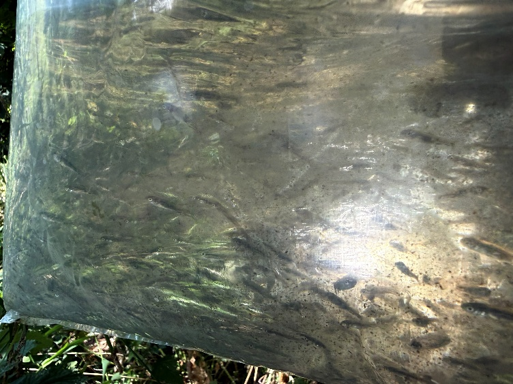
We were asked by the BBC to arrange ‘celebratory’ fish release with Paul and Bob from the Gone Fishing programme somewhere near Newbury which turned out to be Chamberhouse Farm again. We were happy oblige as this is a great release site benefitting multiple other downstream fisheries through the natural downstream drift of fry. Obviously getting our hatchery project on national TV was a fantastic opportunity not to be missed and will help with continuing fund raising endeavours. Below are some pictures of this years release, but you’ll have to wait until the autumn to see us on the box.




ENCOURAGING SIGNS
Anyone following the angling club Facebook pages will have seen a marked increased in the number of small barbel reported this year by anglers. Many these were of a size that could be attributed to our releases over the last couple years. It’s far too soon to draw any definitive conclusions but the early signs are encouraging from Newbury right down to the outskirts of Reading.
THANKS FOR ALL YOUR SUPPORT
We hope you agree that the Kennet Hatchery is doing well and that the future signs are encouraging. We know from our previous stockings of grayling that young coarse fish fry can survive and grow on in the river below Newbury if they can get past the biological block of crayfish predation. That’s why we wait until our young fish are fully able to swim up in the water column before we consider releasing them.
The support and level of interest this project has generated is nothing short of humbling with all our partners recommitting their financial contributions. RDAA put out an appeal to our own members to make a voluntary additional donation to the Kennet Hatchery when renewing their permits. This far exceeded expectations delivering over £7000 in the last two years year. However, we cannot allow this momentum to wane. I would urge all clubs to try and put something in place to facilitate interested members to contribute. If anglers want to make an individual donation the easiest way is to complete the form below.
I’ve had a couple of requests to re-run the Hatchery Open Days again so please let me know if your club would interested and if the demand is there we will get something sorted in October.
Once again…thanks for your continuing support and encouragement
Del
Del Shackleford
RDAA & Kennet Hatchery Manager


Comments